Showing posts with label mid-century. Show all posts

Sylvia Plath


Black Rook in Rainy Weather

                    On the stiff twig up there

Hunches a wet black rook
Arranging and rearranging its feathers in the rain.
I do not expect a miracle
Or an accident

To set the sight on fire
In my eye, I seek
No more in the desultory weather some design,
But let spotted leaves fall as they fall,
Without ceremony, or portent.

Although, I admit, I desire,
Occasionally, some backtalk
From the mute sky, I can't honestly complain:
A certain minor light may still
Leap incandescent

Out of the kitchen table or chair
As if a celestial burning took
Possession of the most obtuse objects now and then —
Thus hallowing an interval
Otherwise inconsequent

By bestowing largesse, honor,
One might say love. At any rate, I now walk
Wary (for it could happen
Even in this dull, ruinous landscape); skeptical,
Yet politic; ignorant

Of whatever angel may choose to flare
Suddenly at my elbow. I only know that a rook
Ordering its black feathers can so shine
As to seize my senses, haul
My eyelids up, and grant

A brief respite from fear
Of total neutrality. With luck,
Trekking stubborn through this season
Of fatigue, I shall
Patch together a content

Of sorts. Miracles occur,
If you care to call those spasmodic
Tricks of radiance miracles. The wait's begun again,
The long wait for the angel.
For that rare, random descent.
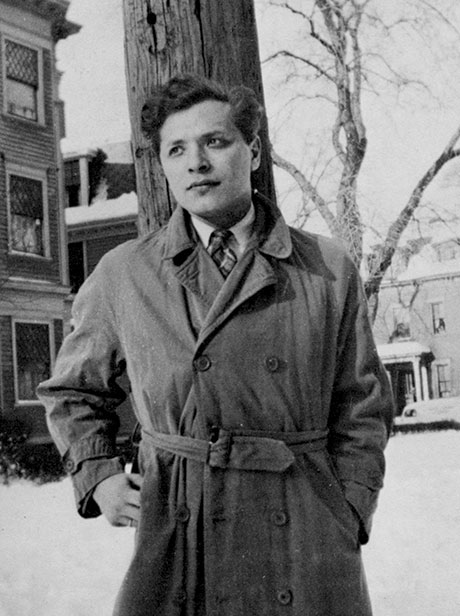
Tony Harrison

 from A Kumquat for John Keats


Today I found the right fruit for my prime,
not orange, not tangelo, and not lime,
nor moon-like gloes of grapefruit that now hang
outside our bedroom, nor tart lemon's tang
(though last year full of bile and self-defeat
I wanted to believe no life was sweet)
nor the tangible sunshine of the tangerine,
and no incongruous citrus ever seen
at greengrocers' in Newcastle or Leeds
mis-spelt by the spuds and mud-caked swedes,
a fruit an older poet might substitute
for the grape John Keats thought to be Joy's fruit,
when, two years before he died, he tried to write
how Melancholy dwelled inside Delight.* / / 
and if John keats had only lived to be,
because of extra years, in need like me,
at 42 he'd help me celebrate
that Micancopy kumquat that I ate
whole, straight off the tree, sweet pulp and sour skin--
or was it sweet outside, and sour within?
For however many kumquats that I eat
I'm not sure if it's flesh or rind that's sweet,
and being a man of doubt at life's mid-way
I'd offer Keats some kumquats and I'd say:
You'll find that one part's sweet and one part's tart:
say where the sweetness or the sourness start.

I find I can't as if one couldn't say
exactly where the night became the day,
which makes for me the kumquat taken whole
best fruit, and metaphor, to fit the soul
of one in Florida at 42 with Keats
crunching kumquats, thinking, as he eats
the flesh, the juice, the pith, the pips, the peel,
that this is how a full life ought to feel,
its perishable relish prick the tongue, 
when the man who savours life's no longer young,
the fruits that were his futures far behind.
Then its the kumquat fruit expresses best
how days have darkness behind them like a rind,
life has a skin of death that keeps its zest.

*Cf. John Keats, "Ode on Melancholy," lines 25-26

Sarah E. Smith:

I have cut a significant portion of this poem, because of limited space and because the poem spins into sentimental personal and social reflections. It is enough, for now, to get a taste of the kumquat Mr. Harrison would like us to mull over the course of this poem. Perhaps it will be helpful for the reader to know that Keats was a Romantic Era poet who died young; after the deaths of many family members from Tuberculosis, he had the premonition that he would die young, and many of his poems wrestle with issues of life and death, love and beauty. They are intensely compact works of art, almost effortlessly holding the reins of emotion, reflection and beauty, letting each lead as it sees fit. Metaphor is key to his work, from which Tony Harrison takes the cue for this poem.

Though not the densest or most profound poem ever written, I find it clever, fun to read, and a good reminder of the dualities we carry within life. One question it raises, I think, is: Do you know you are going to die? How of

Fleur Adcock


The Ex-Queen Among the Astronomers

They serve revolving saucer eyes,
dishes of stars; they wait upon
huge lenses hung aloft to frame
the slow procession of the skies.

They calculate, adjust, record,
watch transits, measure distances.
They carry pocket telescopes
to spy through when they walk abroad.

Spectra possess their eyes; they face
upwards, alert for meteorites,
cherishing little glassy worlds;
receptacles for outer space.

But she, exile, expelled, ex-queen,
swishes among the men of science
waiting for cloudy skies, for nights
when constellations can’t be seen.

She wears the rings he let her keep;
she walks as she was taught to walk
for his approval, years ago.
His bitter features taunt her sleep.

And so when these have laid aside
their telescopes, when lids are closed
between machine and sky, she seeks
terrestrial bodies to bestride.

She plucks this one or that among
the astronomers, and is become
his canopy, his occultation;
she sucks at earlobe, penis, tongue

mouthing the tubes of flesh; her hair
crackles, her eyes are comet-sparks.
She brings the distant briefly close
above his dreamy abstract stare.


Weldon Kees


1926

The porchlight coming on again,

Early November, the dead leaves

Raked in piles, the wicker swing

Creaking. Across the lots

A phonograph is playing Ja-Da.

An orange moon. I see the lives

Of neighbors, mapped and marred

Like all the wars ahead, and R.

Insane, B. with his throat cut,

Fifteen years from now, in Omaha.

I did not know them then.

My airedale scratches at the door.

And I am back from seeing Milton Sills

And Doris Kenyon. Twelve years old.

The porchlight coming on again.

Weldon Kees

   from Eight Variations

       5.

      Among Victorian beadwork and the smell of plush,

      The owls, stuffed and marvelously sinister,

      Glare from dark corners, waiting for the night.

      High up, the moose’s passive eyes explore

      Candles, unlit, within cut-glass. A door

      Is opened, and you enter with a look

      You might have saved for Pliny or the Pope.

      The furniture has shrunk now thirty years

      Have passed (with talent thinning out, and words

      Gone dead), and mouths of friends in photographs

      Display their hopeful and outmoded smiles.

      You counted on at least a sputter of nostalgia,

      However fretful. That was a mistake. Even the moose

      Regards you with a tired, uncomprehending stare.


Weldon Kees


Crime Club


No butler, no second maid, no blood upon the stair.
No eccentric aunt, no gardener, no family friend
Smiling among the bric-a-brac and murder.
Only a suburban house with the front door open
And a dog barking at a squirrel, and the cars
Passing.  The corpse quite dead.  The wife in Florida.

Consider the clues:  the potato masher in a vase,
The torn photograph of a Wesleyan basketball team,
Scattered with check stubs in the hall;
The unsent fan letter to Shirley Temple,
The Hoover button on the lapel of the deceased,
The note:  "To be killed this way is quite all right with me."

Small wonder that the case remains unsolved,
Or that the sleuth, Le Roux, is now incurably insane,
And sits alone in a white room in a white gown,
Screaming that all the world is mad, that clues
Lead nowhere, or to walls so high their tops cannot be seen;
Screaming all day of war, screaming that nothing can be
    solved. 


Sylvia Plath


Mad Girl's Love Song

I shut my eyes and all the world drops dead;
I lift my lids and all is born again.
(I think I made you up inside my head.)

The stars go waltzing out in blue and red,
And arbitrary blackness gallops in:
I shut my eyes and all the world drops dead.

I dreamed that you bewitched me into bed
And sung me moon-struck, kissed me quite insane.
(I think I made you up inside my head.)

God topples from the sky, hell's fires fade:
Exit seraphim and Satan's men:
I shut my eyes and all the world drops dead.

I fancied you'd return the way you said,
But I grow old and I forget your name.
(I think I made you up inside my head.)

I should have loved a thunderbird instead;
At least when spring comes they roar back again.
I shut my eyes and all the world drops dead.
(I think I made you up inside my head.)

Delmore Schwartz

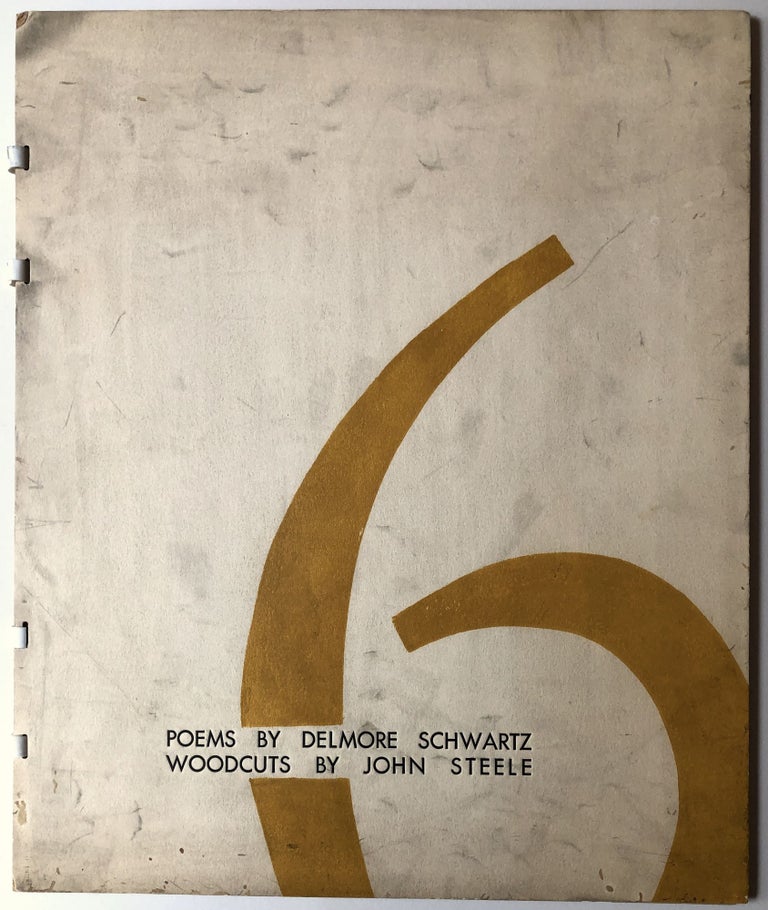
Image 1 of 11 for Item #H18898 6 Poems by Delmore Schwartz (livre d'artiste, 1953, one of 20 copies). Delmore Schwartz, John Steele.

Archaic Bust of Apollo 

                        (after Rilke)

We cannot know the indescribable face
Where the eyes like apples ripened. Even so,
His torso has a candelabra's glow,
His gaze, contained as in a mirror's grace,

Shines within it. Otherwise his breast
Would not be dazzling. Nor would you recognize
The smile that moves along his curving thighs,
There where love's strength is caught within its nest.

This stone would not be broken, but intact 
Beneath the shoulders' flowing cataract, 
Nor would it glisten like a stallion's hide,

Brimming with radiance from every side
As a star sparkles. Now it is dawn once more.
All places scrutinize you. You must be reborn.

Delmore Schwartz


The Heavy Bear Who Goes With Me

Delmore Schwartz


from Saul Bellow's Humboldt's Gift

Orpheus, the son of Greenhorn, turned up in Greenwich Village with his ballads. He loved literature and intellectual conversation and argument, loved the history of thought. A big gentle handsome boy he put together his own combination of symbolism and street language. Into this mixture went Yeats, Apollinaire, Lenin, Freud, Morris R. Cohen, Gertrude Stein, baseball statistics, and Hollywood gossip. He brought Coney Island into the Aegean and united Buffalo Bill with Rasputin. He was going to join together the Art Sacrament and the Industrial USA as equal powers. Born (as he insisted) on a subway platform at Columbus Circle, his mother going into labor on the IRT, he intended to be a divine artist, a man of visionary states and enchantments, Platonic possession. He got a Rationalistic, Naturalistic education at CCNY. This was not easily reconciled with the Orphic. But all his desires were contradictory. He wanted to be magically and cosmically expressive and articulate, able to say anything; he wanted also to be wise, philosophical, to find the common ground of poetry and science, to prove that the imagination was just as potent as machinery, to free and bless humankind. (p. 120)

Delmore Schwartz

 O Love, dark animal

Delmore Schwartz

O Love, dark animal,
With your strangeness go
Like any freak or clown:
Appease the child in her
Because she is alone
Many years ago
Terrified by a look
Which was not meant for her.
Brush your heavy fur
Against her, long and slow
Stare at her like a book,
Her interests being such
No one can look too much.
Tell her how you know
Nothing can be taken
Which has not been given:
For you time is forgiven:
Informed by hell and heaven
You are not mistaken


Delmore Schwartz


        his copy of Finnegan's Wake


Delmore Schwartz must have spent more time thinking about Finnegans Wake than almost anybody else. Yet it's a shame he wrote very little about the book. I've found just one essay, 'The Vocation of the Poet in the Modern World', written in 1951, in which he talks about what the Wake meant to him:

'Joyce had completed his last and probably his best book, the stupendous Finnegans Wake, a book which would itself provide sufficient evidence and illustration of the vocation of the modern poet in modern life. All that has been observed in Eliot's work is all the more true of Finnegans Wake – the attention to colloquial speech, the awareness of the variety of ways that languages can be degraded, and how that degradation can be the base for a new originality and exactitude, the sense of an involvement with theinternational scene and all history. But more than that, the radio and even televisionplay a part in this wonderful book, as indeed they played a part in the writing of it. Joyce had a short wave radio with which he was able to hear London, Moscow, Dublin – and New York!  In Finnegans Wake, I was perplexed for a time by echoes of American radio comedy and Yiddish humor until I learned about Joyce's radio and about his daily reading of the Paris edition of the New York Herald-Tribune.' The most important point of all, however, is that Finnegans Wake exhibits in the smallest detail and in the entire scope of the work the internationality of the modern poet, his involvement in all history, and his consciousness of the impingement of any foreign language from Hebrew to Esperanto upon the poet's use of the English language.....'


Delmore Schwartz

A black-and-white photograph of a young man wearing a dark suit. He is crossing his arms and looking down and away. 

The beautiful American word, Sure, 

The beautiful American word, Sure, 
As I have come into a room, and touch 

The lamp's button, and the light blooms with such 
Certainty where the darkness loomed before, 

As I care for what I do not know, and care 
Knowing for little she might not have been, 
And for how little she would be unseen, 
The intercourse of lives miraculous and dear. 

Where the light is, and each thing clear, 
separate from all others, standing in its place, 
I drink the time and touch whatever's near, 

And hope for day when the whole world has that face: 
For what assures her present every year? 
In dark accidents the mind's sufficient grace.

James Wright


Robert Bly at the Poetry Out Loud Minnesota Finals at the FItzgerald Theater. 2009. Photo by Nic McPhee.


From a Bus Window in Central Ohio, Just Before a Thunder Shower


Cribs loaded with roughage huddle together
Before the north clouds.
The wind tiptoes between poplars.
The silver maple leaves squint 
toward the ground.
An old farmer, his scarlet face
Apologetic with whiskey, swings back a barn door
And calls a hundred black-and-white Holsteins
From the clover field.

Delmore Schwartz

Image may contain Face Human Person Head Jaw Photo Photography Portrait and Man

In The Naked Bed, In Plato's Cave

In the naked bed, in Plato's cave, 
Reflected headlights slowly slid the wall,
Carpenters hammered under the shaded window,
Wind troubled the window curtains all night long,
A fleet of trucks strained uphill, grinding,
Their freights covered, as usual.
The ceiling lightened again, the slanting diagram
Slid slowly forth.
                     Hearing the milkman's clop,
his striving up the stair, the bottle's chink,
I rose from bed, lit a cigarette,
And walked to the window. The stony street
Displayed the stillness in which buildings stand,
The street-lamp's vigil and the horse's patience.
The winter sky's pure capital
Turned me back to bed with exhausted eyes.

Strangeness grew in the motionless air. The loose
Film grayed. Shaking wagons, hooves' waterfalls,
Sounded far off, increasing, louder and nearer.
A car coughed, starting. Morning softly
Melting the air, lifted the half-covered chair
From underseas, kindled the looking-glass,
Distinguished the dresser and the white wall.
The bird called tentatively, whistled, called,
Bubbled and whistled, so! Perplexed, still wet
With sleep, affectionate, hungry and cold. So, so,
O son of man, the ignorant night, the travail
Of early morning, the mystery of the beginning
Again and again,
                     while history is unforgiven.

Countee Cullen


for Harold Jackman

Love Tree
Come, let us plant our love as farmers plant
A seed, and you shall water it with tears,
And I shall weed it with my hands until
They bleed. Perchance this buried love of ours
Will feed on goodly ground and bear a tree
With fruit and flowers; pale lovers chancing
May pluck and eat, and through their veins a sweet
And languid ardor play, their pulses beat
An unimagined tune, their shy lips meet
And part, and bliss repeat again. And men
Will pilgrimage from far and wide to see
This tree for which we two were crucified,
And, happy in themselves, will never know
‘Twas break of heart that made the Love Tree grow.

Countee Cullen


                            Atlantic City Waiter

                             With subtle poise he grips his tray

   Of delicate things to eat;
Choice viands to their mouths half way,
   The ladies watch his feet
Go carving dexterous avenues
   Through sly intricacies;
Ten thousand years on jungle clues
   Alone shaped feet like these.
For him to be humble who is proud
   Needs colder artifice;
Though half his pride is disavowed,
   In vain the sacrifice.
Sheer through his acquiescent mask
   Of bland gentility,
The jungle flames like a copper cask
   Set where the sun strikes free.

Delmore Schwartz


                                    with Alma and James Agee (1938)

Jonathan Galassi from "The Troubling Genius of Delmore," NYRB (June 23, 1916)

The critic Michael Clune has written about Ashbery that the basic unit of his poetic practice is not the book, or even the poem, but the line. I think the same can be said for Delmore; apart from his few best poems, what really stays with the reader are individual lines, some of them employed, with slight variations, as titles:

The heavy bear who goes with me…
In the naked bed, in Plato’s cave…
The beautiful American word, Sure…
Tired and unhappy, you think of houses…
We are Shakespearean, we are strangers.
The mind is a city like London, Smoky and populous…
The actual is like a moist handshake, damp with nervousness or the body’s heat.

It’s impossible to gainsay the brilliance of these phrases, even when great poems fail to rise out of them. As Pollet said of Delmore’s voluminous diaries: “He begins the journals conscious of it as a literary form and therefore conscious of a potential audience. But the focus and coherence this implies is [sic] not sustained.” For Pollet he was sometimes “the poet, the Orpheus, transcending this world to make music out of things he alone had penetrated to and heard”; at others, he was “the wounded genius, the heavy bear of his poems, the naïf scheming to be practical in impractical ways.”

*****

In his best work, Delmore lives on perpetually young, perpetually aspiring and anxious, and its power and intensity keep on creating disciples. Lou Reed, a student at Syracuse in his last years, said, “I wanted to write. One line as good as yours. My mountain. My inspiration.”

Let Berryman have the last word:

The spirit & the joy, in memory
live of him on, the young will read his young verse
for as long as such things go…
 

Gwendolyn Brooks


kitchenette building

We are things of dry hours and the involuntary plan,

Grayed in, and gray. “Dream” makes a giddy sound, not strong

Like “rent,” “feeding a wife,” “satisfying a man.”

But could a dream send up through onion fumes

Its white and violet, fight with fried potatoes

And yesterday’s garbage ripening in the hall,

Flutter, or sing an aria down these rooms

Even if we were willing to let it in,

Had time to warm it, keep it very clean,

Anticipate a message, let it begin?

We wonder. But not well! not for a minute!

Since Number Five is out of the bathroom now,

We think of lukewarm water, hope to get in it.

D. H. Lawrence

 from Pansies THE WHITE HORSE The youth walks up to the white horse, to put its halter on and the horse looks at him in silence. They are s...